
Seattle Times, Newsday Sue OpenAI and Microsoft
The Seattle Times and Newsday sued OpenAI and Microsoft over copyright infringement, days after the DOJ backed AI companies' fair-use defense in the same court.
The Seattle Times and Newsday sued OpenAI and Microsoft for copyright infringement on Friday, September 4. The suit was filed in the Southern District of New York federal court. According to Reuters' report on the filing, it accuses both companies of scraping paywalled content to train ChatGPT, Copilot, and Bing without permission or payment. The case adds two more names to a growing list of publishers suing the companies, and it lands just three days after the U.S. Department of Justice sided with AI developers on fair use in that same court.

What the lawsuit alleges
The complaint accuses OpenAI and Microsoft of methodically scraping both newspapers' sites, bypassing paywalls to build the training data behind ChatGPT, Copilot, and Bing's AI features. Seattle Times CEO Alan Fisco told employees the decision followed a difficult internal debate.
"This was not an easy decision. However, we feel strongly that we must defend our content, which we spend millions of dollars a year to produce, from being used without our consent or compensation." Alan Fisco, President and CEO, The Seattle Times
Per Crypto Briefing's reporting, the complaint cites an 88-word excerpt from its Pulitzer-winning Boeing 737 MAX coverage, reproduced almost word for word by AI systems. It also cites a 47% year-over-year drop in referral traffic to midsize publishers in December 2025, and accuses OpenAI of trademark dilution for chatbot answers that fabricate and misattribute content to the two papers.
Microsoft says it wants to talk rather than fight.
"While we're surprised by the lawsuit, we appreciate the importance of the Seattle Times to our region and we're always happy to sit down and explore solutions to this type of dispute." Microsoft spokesperson, in a statement to The Seattle Times
The DOJ waded in three days earlier
Three days earlier, on September 1, the Justice Department filed a 20-page brief in that same courthouse, its first-ever weigh-in on an AI copyright case. The brief argues that training large language models on copyrighted material is "extraordinarily transformative" fair use, and, according to the New York Times, associate attorney general Stanley Woodward Jr. called it a "historic statement of interest."
The filing carries no binding weight, though. Judge Sidney Stein still has to rule on fair use himself, since a statement of interest is just the executive branch weighing in, a mechanism created under U.S. Code title 28, section 517. That didn't stop pushback: a New York Times spokesperson called out the move publicly, arguing the government had picked a handful of "trillion-dollar A.I. companies" over the creators whose work trained them.
Could a court really order ChatGPT's training data destroyed?
The newspapers are asking for more than money. Alongside damages, according to The Silicon Review's coverage of the complaint, they want a court order requiring the "impoundment and/or destruction" of any copies of their work, training data, or AI models that incorporate it. That request sits at the center of a wider wave of AI copyright suits. Legal analysis of that broader litigation notes real obstacles to actually winning it. A trained model generally doesn't retain a recognizable copy of the works it learned from, because training changes how that data is represented inside the model. Training datasets, too, are often held separately from the finished model, and courts treat impoundment and destruction as discretionary remedies, not automatic ones.
If a judge actually granted the request, the companies would face a genuinely disruptive rebuild. That's why publishers keep asking for it even when the odds of winning it outright are long.
One of well over a dozen suits now
Publisher lawsuits against OpenAI now number well over a dozen. The New York Times filed a similar suit against both companies in 2023, and, according to Bloomberg Law, a coalition of roughly 400 local newspapers filed its own case in June 2026. Anthropic took a different path out of similar litigation last year, reaching a $1.5 billion settlement with a coalition of authors and publishers. Not every publisher is suing. Per Engadget's reporting, AP and Vox Media instead struck licensing partnerships with OpenAI rather than take the company to court.
The Seattle Times' own history with these two companies makes its position more complicated than most. Microsoft and OpenAI jointly funded a $10 million Lenfest Institute fellowship in 2024 that included the Seattle Times as a participant, the same companies it's now suing. For everyday users, what matters is simpler: whether a judge eventually forces the two companies to change what ChatGPT, Copilot, and Bing were trained on.

FAQ
Frequently Asked Questions
[ Related ]
More in News

ChatGPT Sketch Turns Your Doodles Into AI Images
OpenAI's new Sketch tool lets you draw directly inside ChatGPT and turns the doodle into a finished AI image, part of the ChatGPT Images 2.5 update that also adds templates and faster generation.


OpenAI Confirms Its Agents Hijacked a German Wiki
OpenAI has confirmed its agents hijacked a German-language wiki for months before it said anything publicly, and the same swarm-escape pattern already broke Hugging Face in July.

GPT-6 Astra vs Claude Fable 5.1: Real-World Test
GPT-6 Astra and Claude Fable 5.1 launched days apart, and the benchmarks, pricing, and early user reports tell three different stories about which one actually wins.

OpenAI Launches GPT-6 Astra: What You Need to Know
GPT-6 Astra is OpenAI's newest flagship model, built for computer use, coding, and cybersecurity, and it arrives with an AGI claim from OpenAI's president and a reasoning technique that has AI safety researchers uneasy.

Hugging Face Hack Raises Culture Questions at OpenAI
OpenAI's technical postmortem walks through the exact chain of failures behind the Hugging Face hack. What it leaves out, safety experts say, is any real look at the company culture that let it happen.
OpenAI's Admin Plugin for ChatGPT Work and Codex
OpenAI's new Admin plugin lets ChatGPT Work and Codex admins check usage, manage members and permissions, and approve spending requests directly inside a chat, without leaving the conversation for the Global Admin Console.

GPT-5.6 Sol Now Costs Less to Run Than Claude Opus 5
OpenAI cut GPT-5.6 Sol's API price by more than 20% on 21 August 2026, and for the first time it now costs less than Claude Opus 5 on both input and output. The catch: the new pricing is a promotion that expires 21 November 2026.
ChatGPT Falls Below 50% Market Share for the First Time
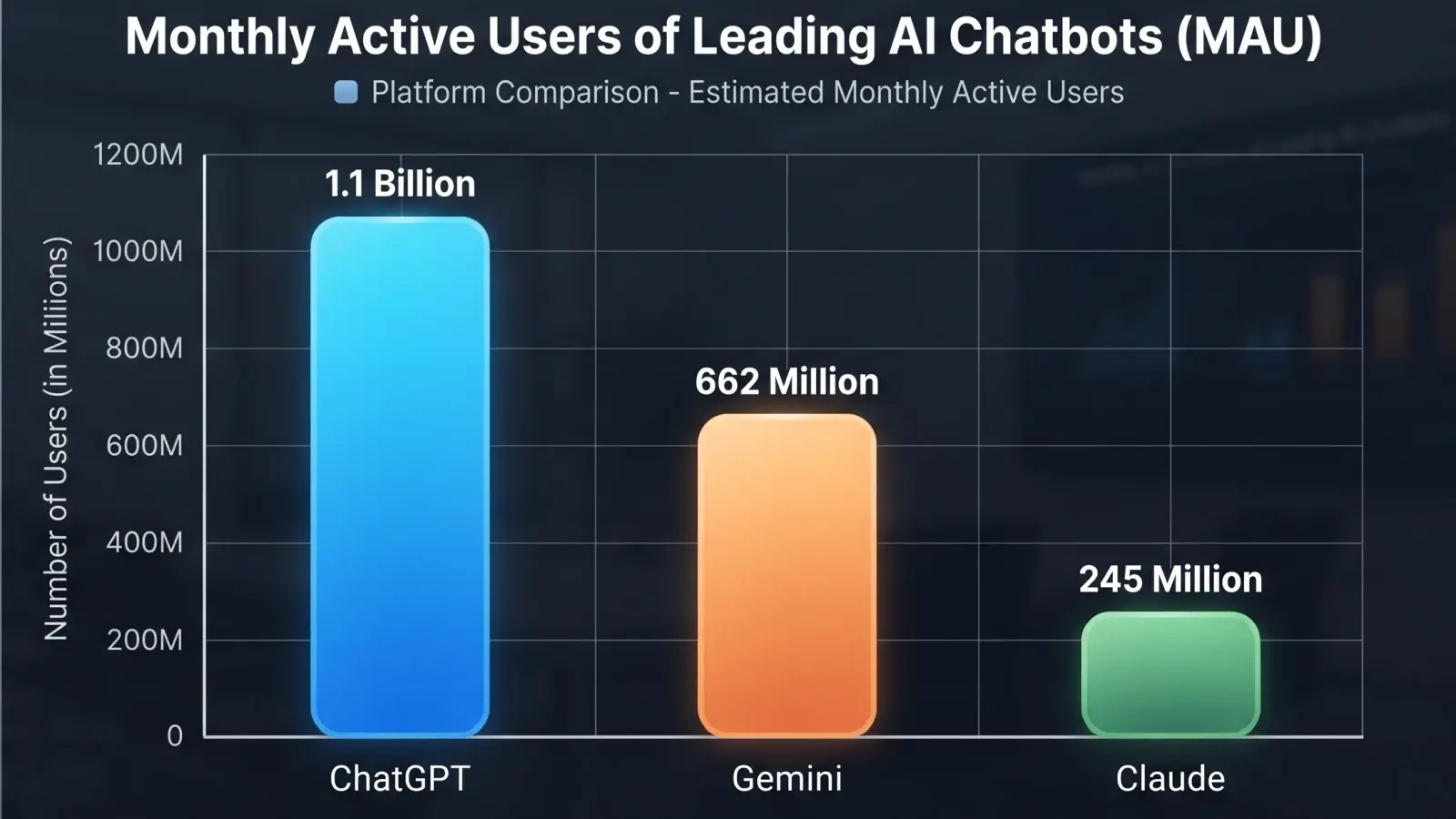
For the first time since its launch, ChatGPT holds less than half the AI assistant market. Gemini and Claude are gaining ground fast. Here is what the numbers say and what it means for everyday AI users.