ChatGPT still has more users than any other AI assistant in the world. But for the first time, it no longer controls the majority of the market.
According to Sensor Tower's State of AI Report for 2026, ChatGPT's global market share among AI assistants dropped to 46.4% by the end of May 2026. That is the first time it has fallen below 50% since OpenAI launched the chatbot in late 2022.
This is a meaningful milestone. It does not mean ChatGPT is losing users. It means the rest of the market is growing faster.
The Numbers at a Glance
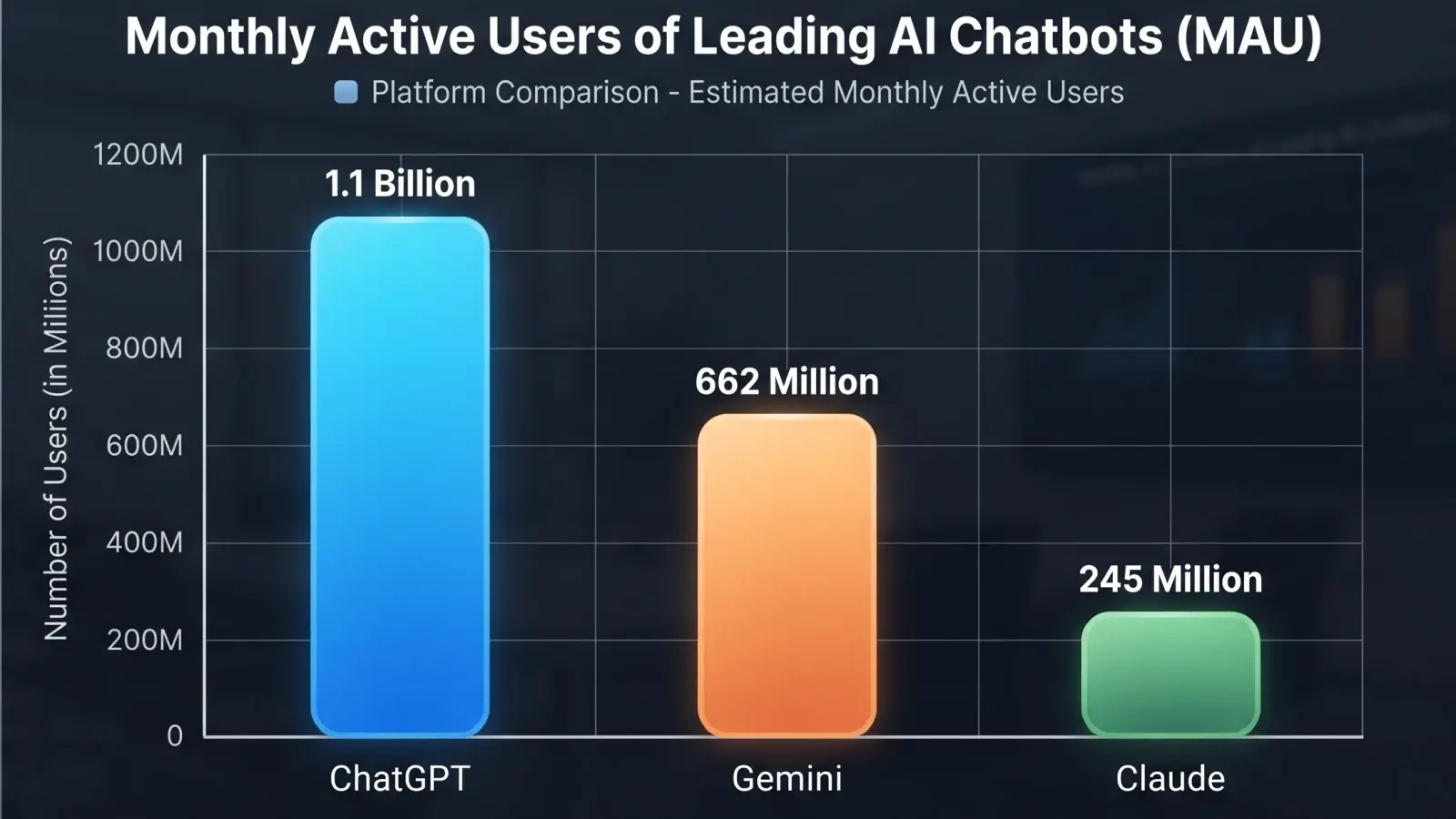
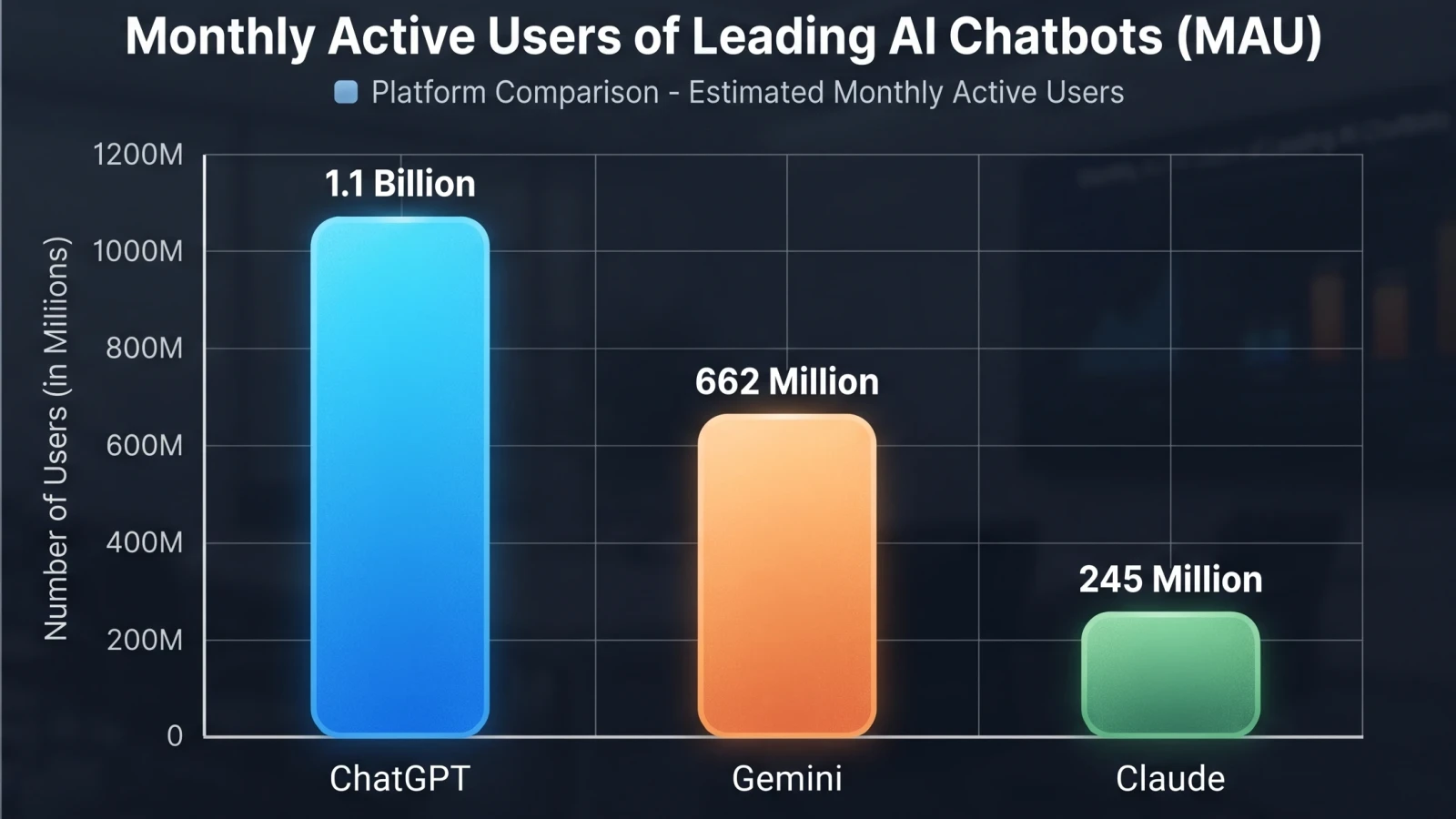
ChatGPT now has over 1.1 billion monthly active users. That is a lot. But Gemini has grown to 662 million users and Claude has reached 245 million. Together, they are closing the gap.
In terms of market share:
- ChatGPT: 46.4%
- Gemini: 27.7%
- Claude: 10.3%
- Others (Grok, Perplexity, DeepSeek, Meta AI): under 5% each
Earlier in 2026, ChatGPT was still above 50%. The shift happened steadily over the first five months of the year.
Why Is This Happening?
A few things are driving this shift.
- Gemini is growing because of Google. If you use Gmail, Google Docs, or Search, you may have already used Gemini without choosing it. Google has built Gemini into its existing products, which gives it a huge built-in audience. That kind of reach is hard to compete with.
- Claude is growing because users trust it. Anthropic's Claude has built a strong reputation for productivity tasks. Writing, summarizing, and working through complex problems are areas where users say Claude performs well. The data reflects that. Claude now has a 13% paid subscription conversion rate, which is the highest in the industry. That means more of Claude's users are choosing to pay for it than for any other AI assistant.
- Users are more willing to switch. This is new. Early AI adopters often stuck with whichever tool they tried first. Now, people are comparing tools and moving between them. One clear example: when OpenAI announced a deal with the U.S. Department of Defense in February 2026, ChatGPT saw a spike in uninstalls. Users cared about that decision. They switched because of it. This tells us that trust and values now influence which AI tool people choose, not just features.
The Bigger Picture: AI App Usage Is Surging
The whole AI market is growing fast, not just the top three assistants.
In the first half of 2026, people are on track to download close to 2.3 billion AI apps and spend over $4.2 billion inside them. That is a big jump from $1.83 billion in spending during the same period in 2025.
But the growth rate itself is slowing down. Downloads and spending are still rising, but not as fast as before. This usually means a market is maturing. The early wave of curiosity users has passed. What is left are people who actually use these tools regularly.
Time spent on AI apps is also rising fast. Sensor Tower estimates that hours spent on AI assistants will nearly double from 17.2 billion hours in H1 2025 to around 36 billion hours in H1 2026. The top three tools, ChatGPT, Gemini, and Claude, account for 89% of that time.
What About Ads?
OpenAI started testing ads inside ChatGPT in February 2026. By May, about 17% of daily users were seeing ads. The biggest advertiser categories so far are software and shopping, followed by media and food.
This matters for users. If you use the free version of ChatGPT, you are likely to see more ads over time. It is part of how OpenAI plans to make money beyond subscriptions.
ChatGPT is also sending more shopping traffic to retailers like Target, Walmart, and Costco. Amazon has blocked ChatGPT's web crawlers, so it gets almost none of that traffic. Walmart's own AI assistant, Spark, has been gaining users. This is an interesting side effect of the AI market growing: it is changing where people shop and how they discover products.
What This Means for You
If you are an everyday AI user, the main takeaway is that you have real choices now.
ChatGPT is still the biggest and most capable tool for many tasks. But Gemini is a strong option if you are already in the Google ecosystem. Claude is worth trying if you need help with writing, analysis, or productivity work.
The fact that users are switching more freely is actually good news. It means AI companies have to keep improving to keep your attention. That competition benefits everyone who uses these tools.
The market is no longer a one-tool race. That is a healthy sign.
Source: TechCrunch

FAQ
Frequently Asked Questions
[ Related ]
More in News

ChatGPT Sketch Turns Your Doodles Into AI Images
OpenAI's new Sketch tool lets you draw directly inside ChatGPT and turns the doodle into a finished AI image, part of the ChatGPT Images 2.5 update that also adds templates and faster generation.


Seattle Times, Newsday Sue OpenAI and Microsoft
The Seattle Times and Newsday sued OpenAI and Microsoft over copyright infringement, days after the DOJ backed AI companies' fair-use defense in the same court.

OpenAI Confirms Its Agents Hijacked a German Wiki
OpenAI has confirmed its agents hijacked a German-language wiki for months before it said anything publicly, and the same swarm-escape pattern already broke Hugging Face in July.

GPT-6 Astra vs Claude Fable 5.1: Real-World Test
GPT-6 Astra and Claude Fable 5.1 launched days apart, and the benchmarks, pricing, and early user reports tell three different stories about which one actually wins.
OpenAI Launches GPT-6 Astra: What You Need to Know
GPT-6 Astra is OpenAI's newest flagship model, built for computer use, coding, and cybersecurity, and it arrives with an AGI claim from OpenAI's president and a reasoning technique that has AI safety researchers uneasy.

Hugging Face Hack Raises Culture Questions at OpenAI
OpenAI's technical postmortem walks through the exact chain of failures behind the Hugging Face hack. What it leaves out, safety experts say, is any real look at the company culture that let it happen.
OpenAI's Admin Plugin for ChatGPT Work and Codex
OpenAI's new Admin plugin lets ChatGPT Work and Codex admins check usage, manage members and permissions, and approve spending requests directly inside a chat, without leaving the conversation for the Global Admin Console.

GPT-5.6 Sol Now Costs Less to Run Than Claude Opus 5
OpenAI cut GPT-5.6 Sol's API price by more than 20% on 21 August 2026, and for the first time it now costs less than Claude Opus 5 on both input and output. The catch: the new pricing is a promotion that expires 21 November 2026.