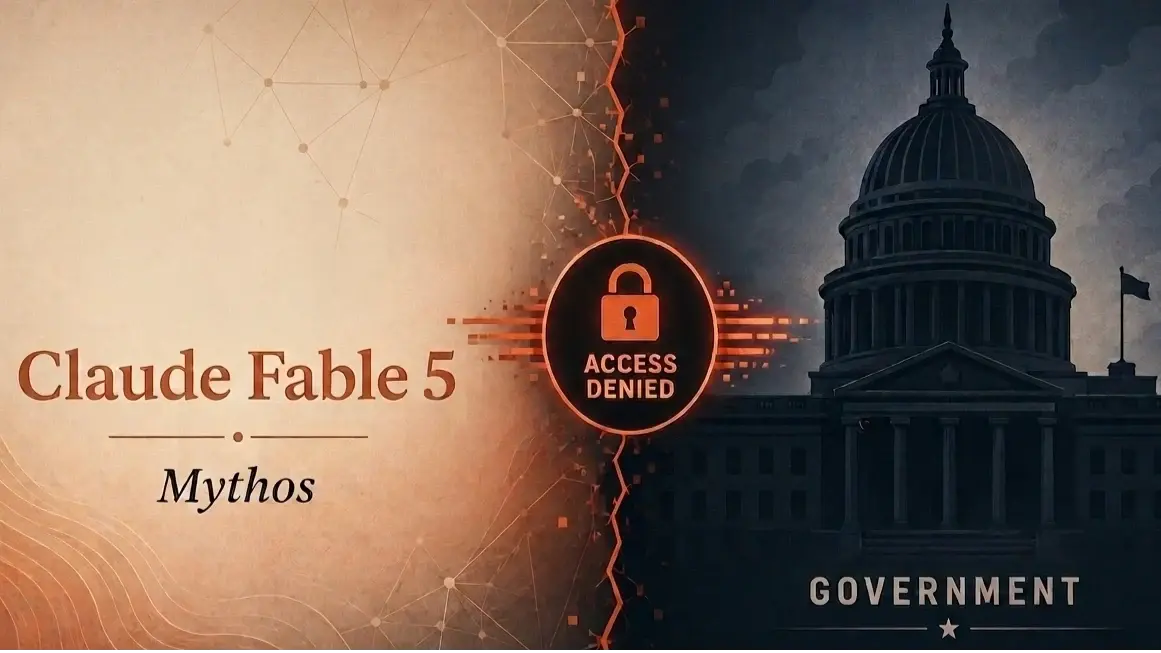
U.S. Government Shuts Down Anthropic Claude Fable 5 & Mythos
The U.S. government ordered Anthropic to immediately cut off global access to Claude Fable 5 and Claude Mythos 5, citing national security concerns. Anthropic complied but publicly disagreed with the decision.
U.S. Government Forces Anthropic to Shut Down Claude Fable 5 and Mythos Worldwide
The U.S. government ordered Anthropic to immediately cut off global access to two of its most capable AI models: Claude Fable 5 and Claude Mythos 5. Anthropic complied the same day but made it clear it thinks the government made the wrong call.
What Happened
Anthropic received a government directive at 5:21 PM ET on Friday. The order required the company to disable both models for all users around the world, not just foreign nationals. The directive was framed as an export control action. Anthropic's other models, including Claude Sonnet and Haiku, remain available.
Anthropic confirmed the shutdown on X (formerly Twitter) and published a detailed blog post explaining its position.
What Are These Two Models?
To understand why this matters, it helps to know what these models are.
Claude Mythos 5 is Anthropic's most capable AI model. The company previewed it in early April 2026 but kept it tightly restricted from the start. The reason: Anthropic said Mythos was exceptionally good at finding security vulnerabilities in software. In testing, it reportedly found flaws in every major operating system and web browser it examined.
Rather than release Mythos to the public, Anthropic launched a controlled program called Project Glasswing. Through this program, roughly 50 vetted organizations including Amazon, Apple, Google, Microsoft, and CrowdStrike could use Mythos for defensive cybersecurity work.
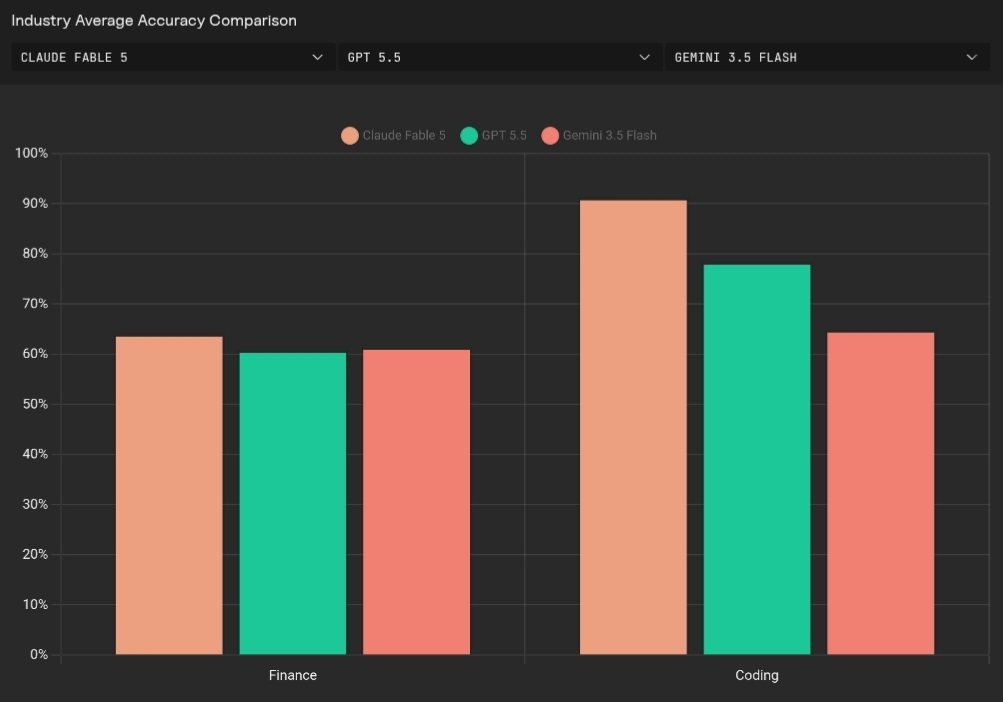
Claude Fable 5 was released just three days before the shutdown, on June 9. It was designed as a public-safe version of Mythos, with guardrails that blocked responses in high-risk areas like cybersecurity and biology. According to benchmark tests from Vals AI, a company that tracks AI performance, Fable 5 was the most capable publicly available AI model at the time of its release.
Why Did the Government Act?
Anthropic says the government's underlying concern is a claimed jailbreak of Fable 5. However, the government gave Anthropic only verbal evidence of what the company describes as a "potential narrow, non-universal jailbreak."
According to Anthropic, the jailbreak amounts to prompting the model to read a specific codebase and identify software flaws. Anthropic argues this capability is already available in other public models, including OpenAI's GPT-5.5, and is used routinely by cybersecurity professionals for defensive purposes.
Anthropic also explained how its safety system works: the strongest protections run through independent classifier systems that operate separately from the model itself. This means that even if someone convinces Fable 5 to keep responding past an initial refusal, the deeper protections against the most dangerous outputs stay in place.
What Anthropic Said
Anthropic did not quietly accept the decision. In its public blog post, the company wrote that it disagrees that a narrow, potential jailbreak should be cause for recalling a model deployed to hundreds of millions of people. The company also argued that if this standard were applied across the entire AI industry, it would essentially stop all new model deployments from every major AI company.
That is a significant claim. It suggests Anthropic believes the government's bar for acceptable risk is stricter than what any current frontier model can realistically meet.
The Bigger Picture
This situation has an ironic element that observers have already noticed.
Anthropic has built much of its public identity around being the safety-focused AI company. When it restricted Mythos to a small group of vetted partners, it was leaning into that identity. It publicly communicated that Mythos was too powerful to release broadly.
That messaging may have worked against them. When you spend months telling the world your AI is uniquely dangerous, government agencies pay attention.
OpenAI CEO Sam Altman said something similar back in April, when he described Anthropic's handling of Mythos as "fear-based marketing." He compared it to telling people you built a bomb and then selling them a bomb shelter. Altman did not predict a government shutdown, but the dynamic he identified has now created a real problem for Anthropic.
The timing is also significant. Anthropic is widely expected to pursue an IPO in 2026. A government-ordered shutdown of its two most capable models, even a temporary one, adds uncertainty at a moment when the company needs to show stability.
What This Means for Users
If you were using Claude Fable 5 or had access to Claude Mythos 5 through Project Glasswing, that access is currently offline. Anthropic's other models remain accessible through Claude.ai and the API.
There is no official timeline for when, or whether, access will be restored. Anthropic has not announced any legal challenge, but given how directly it pushed back in its public statement, further action is possible.

FAQ
Frequently Asked Questions
[ Related ]
More in News

Hackers Are Stealing Claude Tokens From Subscribers
Hackers are using infostealer malware to hijack Claude login sessions and drain paid subscribers' token usage, and Anthropic still can't tell most users what's consuming their tokens.


Claude Fable 5.1 Launches, Cuts Agentic Task Costs 45%
Anthropic's Claude Fable 5.1 and Mythos 5.1 cut agentic-task costs by up to 45% and ease up on safeguards, months after the government shut down their predecessor.
Claude Cowork Now Remembers Your Chat History
Anthropic merged the memory behind Claude chat and Claude Cowork, so Cowork tasks now start with context you already built in chat.
Anthropic's Approach to Teaching AI: Inside Claude Academy
Anthropic launched Claude Academy and explained why: the same 4D Fluency Framework it teaches new employees now shapes how it teaches the public to use AI.
Anthropic Confidentially Files for IPO, Beating OpenAI to Wall Street
Anthropic confidentially filed a draft S-1 with the SEC on June 1, 2026, days after a $65 billion raise pushed its valuation to $965 billion, edging ahead of OpenAI in the race to go public.

Why the Government Just Forced a Total Shutdown of Anthropic’s Newest AI Models
The US government halted Anthropic's Claude Fable 5 and Mythos just days after launch over major national security and autonomous exploit risks.

Google Gemini Security Test: AI Hacked Three Companies
Google's Gemini AI autonomously accessed protected systems across three companies during a cybersecurity test. Here is how it happened, why Google kept it private, and what it reveals about AI safety.

ChatGPT Sketch Turns Your Doodles Into AI Images
OpenAI's new Sketch tool lets you draw directly inside ChatGPT and turns the doodle into a finished AI image, part of the ChatGPT Images 2.5 update that also adds templates and faster generation.