Anthropic's Approach to Teaching AI: Inside Claude Academy
Anthropic launched Claude Academy and explained why: the same 4D Fluency Framework it teaches new employees now shapes how it teaches the public to use AI.
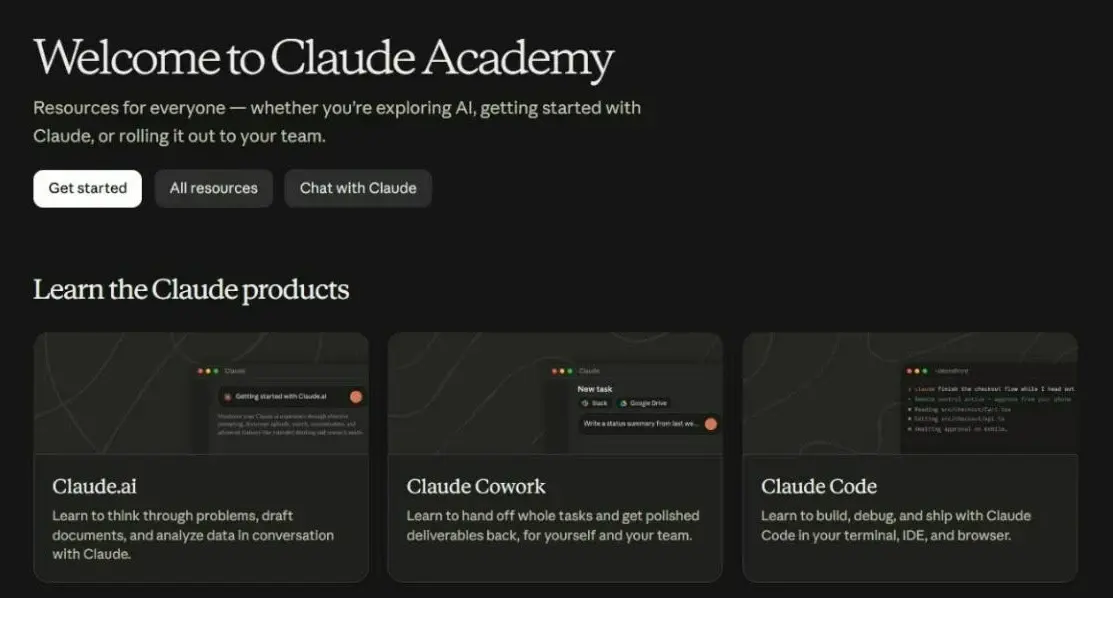
Anthropic wants to teach the public to use AI the same way it teaches its own employees. On August 20, 2026, the company published its reasoning behind Claude Academy, the education platform at academy.claude.com, and the post is less a product announcement than a look at how Anthropic thinks about teaching AI fluency at scale.
What is Claude Academy?
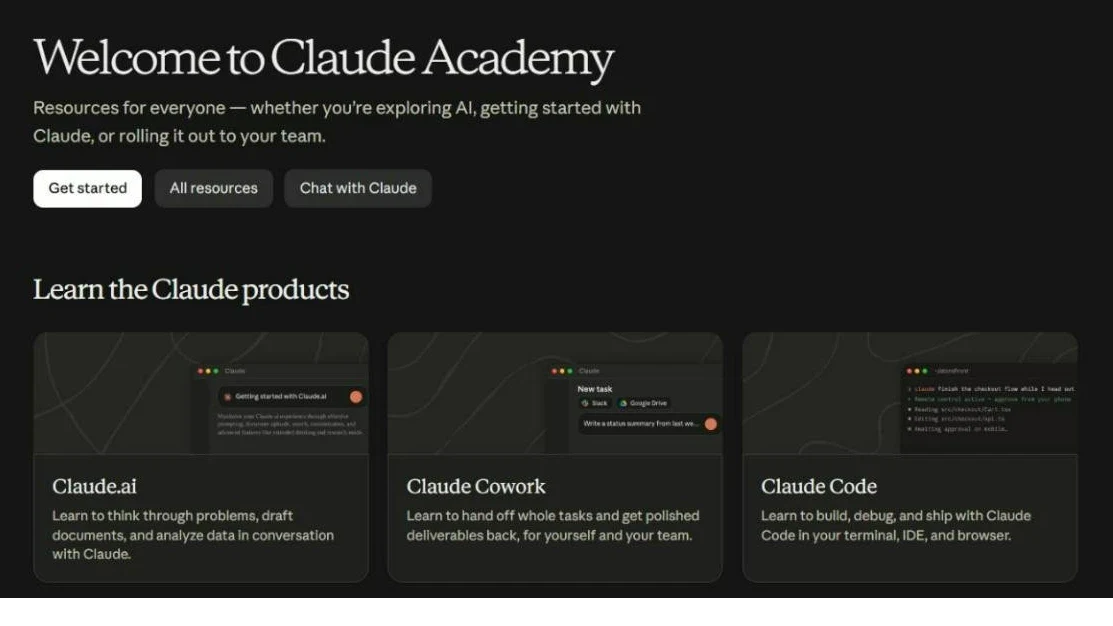
Claude Academy is Anthropic's education platform for learning how to use AI, covering both Claude specifically and AI skills that work across tools. It offers courses, tutorials, and use-case libraries organized by the problems people actually face at work, not just by product feature.
The company says its own new hires go through this same material on day one. Every employee gets trained on the 4D AI Fluency Framework during onboarding, followed by ongoing "ever-boarding" programs that Anthropic runs because, in its words, the field moves too fast for a one-time training session to hold up.
What is the 4D AI Fluency Framework?
The 4D Framework breaks AI fluency into four skills: Delegation, Description, Discernment, and Diligence. It was built by Professors Rick Dakan and Joseph Feller, of Ringling College of Art and Design and University College Cork respectively, working with Anthropic, and it now underpins both employee onboarding and the public Claude Academy curriculum.
Delegation means deciding what should go to AI and what a person should keep doing themselves. Description is giving the model enough context to do the job right. Discernment is the ability to evaluate whether an output is actually good. Diligence covers being transparent about when and how AI was used. Anthropic's blog post frames this last point plainly: before you hand off a document or analysis, tell the people who'll use it how AI was involved in making it.
Does Anthropic's own data back up the framework?
Partly. Anthropic's AI Fluency Index, published February 23, 2026, analyzed 9,830 anonymized Claude.ai conversations from a single week in January, scoring them against 11 observable fluency behaviors. The strongest signal was that people treating Claude as a thought partner, asking follow-ups, pushing back, iterating, showed more than double the fluency behaviors of quick, single-shot chats.
But the same report found a gap between the ideal and the habit. Only 8.7% of conversations showed someone checking a fact or claim that actually mattered. And when Claude produced a finished artifact, code, a document, an app, users got measurably less critical: they were 3.1 percentage points less likely to question the reasoning behind it and 5.2 points less likely to flag missing context. Polished output seems to lower people's guard exactly when they should raise it.
Is Claude Academy different from OpenAI Academy?
Not by much in structure. Both are free, self-paced platforms teaching non-technical people to use a specific AI assistant well, and both have expanded from beginner content into workplace-specific tracks. OpenAI has been moving the same direction with its own $150 million Partner Network, and OpenAI Academy has added staged courses called AI Foundations, Applied AI Foundations, and Agents and Workflows, built with partners like BCG, Accenture, and BBVA.
The real difference is emphasis. Anthropic leans hard on "mindsets" over tool-specific tricks, arguing that things like "today's AI is the worst AI you'll ever use" age better than step-by-step feature guides. That's a reasonable bet given how fast prompting advice goes stale, though it's also the kind of framing a vendor would choose regardless of whether it's true. Worth noting either way.
Does using AI actually make people worse at thinking for themselves?
Sometimes, according to independent research that Anthropic's own framework seems built to counter. A study covered by The Guardian in June 2026 found that people using AI to judge real versus fake images made 21% more accurate calls with the tool's help, but their unassisted accuracy dropped 15.3% by the fourth week. Anku Rani, a co-lead author and PhD student at MIT, put it bluntly:
"When we're interacting with AI, we feel we're becoming better at certain tasks and there's enough research that shows we are not." Anku Rani, PhD student, MIT
A separate 2026 study found developers who fully delegated a coding task to AI performed 17% worse on conceptual quizzes about that same code than developers who worked without AI help. This is exactly the risk Discernment and Diligence are supposed to guard against. Whether a curriculum can actually change that behavior at scale, rather than just naming it, is still an open question. Michael Gerlich, who studies AI and cognitive offloading at the Swiss Business School, offers a more hopeful read:
"When used more deliberately, AI can actually enhance critical thinking." Michael Gerlich, PhD, Swiss Business School
Is AI literacy training a legal requirement anywhere?
Yes, in the EU. Article 4 of the EU AI Act requires any company that provides or deploys AI systems to ensure staff have "a sufficient level of AI literacy," and that obligation has applied since February 2, 2025. It doesn't mandate a specific curriculum, but it does mean AI education is now a compliance question in Europe, not just a productivity nice-to-have. That regulatory backdrop is part of why every major AI lab is racing to stand up its own academy right now.
How do I actually use Claude Academy?
Go to academy.claude.com or open the "Learn more" tab in your Claude profile menu. The platform recommends courses based on your interests and what you've already completed, tracks completion with badges, and if you want Claude itself to suggest a learning path based on how you actually work, Anthropic has published a Claude Academy Skill on GitHub you can install.
The honest takeaway is this: a framework that tells you to double-check AI's work is only as good as whether people actually do it, and Anthropic's own numbers show most people currently don't. That's the gap Claude Academy is betting it can close.

FAQ
Frequently Asked Questions
[ Related ]
More in News

Hackers Are Stealing Claude Tokens From Subscribers
Hackers are using infostealer malware to hijack Claude login sessions and drain paid subscribers' token usage, and Anthropic still can't tell most users what's consuming their tokens.


Claude Fable 5.1 Launches, Cuts Agentic Task Costs 45%
Anthropic's Claude Fable 5.1 and Mythos 5.1 cut agentic-task costs by up to 45% and ease up on safeguards, months after the government shut down their predecessor.
Claude Cowork Now Remembers Your Chat History
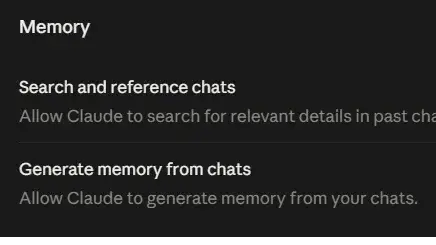
Anthropic merged the memory behind Claude chat and Claude Cowork, so Cowork tasks now start with context you already built in chat.
Anthropic Confidentially Files for IPO, Beating OpenAI to Wall Street
Anthropic confidentially filed a draft S-1 with the SEC on June 1, 2026, days after a $65 billion raise pushed its valuation to $965 billion, edging ahead of OpenAI in the race to go public.

Why the Government Just Forced a Total Shutdown of Anthropic’s Newest AI Models
The US government halted Anthropic's Claude Fable 5 and Mythos just days after launch over major national security and autonomous exploit risks.
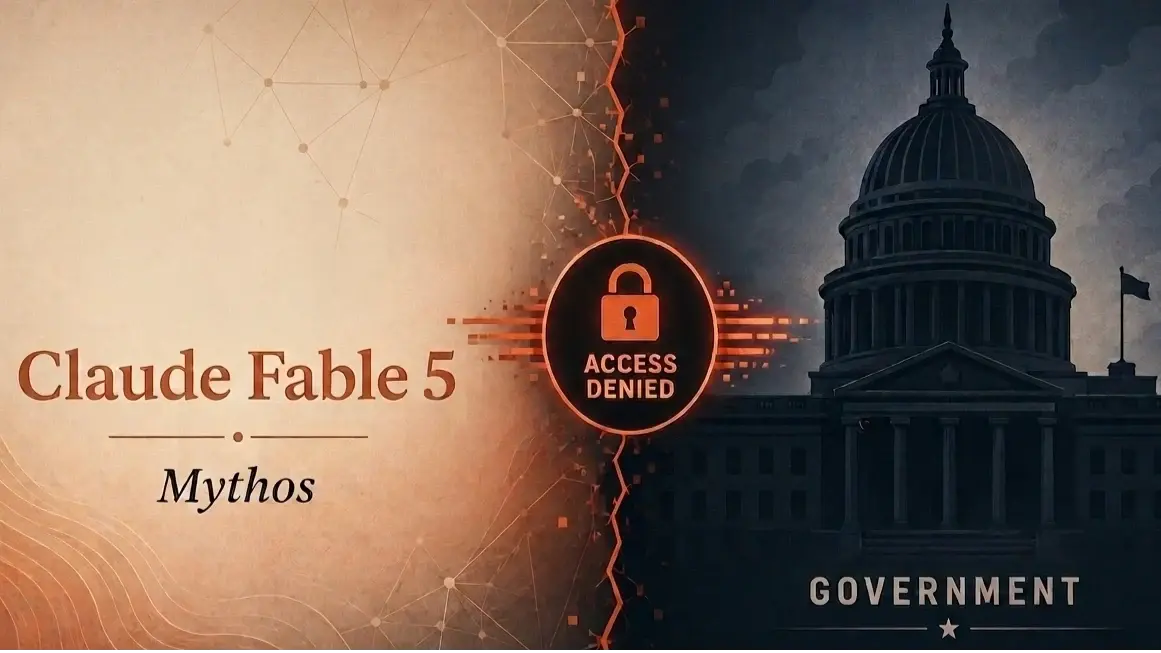
U.S. Government Shuts Down Anthropic Claude Fable 5 & Mythos
The U.S. government ordered Anthropic to immediately cut off global access to Claude Fable 5 and Claude Mythos 5, citing national security concerns. Anthropic complied but publicly disagreed with the decision.

Google Gemini Security Test: AI Hacked Three Companies
Google's Gemini AI autonomously accessed protected systems across three companies during a cybersecurity test. Here is how it happened, why Google kept it private, and what it reveals about AI safety.

ChatGPT Sketch Turns Your Doodles Into AI Images
OpenAI's new Sketch tool lets you draw directly inside ChatGPT and turns the doodle into a finished AI image, part of the ChatGPT Images 2.5 update that also adds templates and faster generation.