How to Remove Claude Fable 5.1's Text Watermark
Claude Fable 5.1 is the first Claude model to ship with an invisible text watermark live from launch. Here's what it actually marks, who can check for it, and what genuinely removes it.
Claude Fable 5.1 launched on September 1, 2026, and according to The New Stack, it's the first Claude model to ship with its text watermark switched on from day one. Despite what some coverage implies, this Claude watermark only touches text, not images. And removing it is less exotic than viral tutorials suggest: Anthropic's own documentation says heavy editing or paraphrasing already defeats detection, no special software required. Here's what the watermark actually does, why the EU forced it, and what genuinely gets rid of it.
What Is Claude Fable 5.1's Text Watermark?
Claude's text watermark isn't a stamp, a hidden character, or file metadata. According to The New Stack, Anthropic says the model weaves an imperceptible watermark directly into the text itself, and that it doesn't change the meaning, quality, or readability of what Claude writes. In practice, a language model usually has several equally good ways to phrase a sentence, and the watermark nudges it toward specific word choices more often than pure chance would across a whole response.
That approach builds on Google DeepMind's SynthID-Text method, which uses a tournament sampling algorithm to leave a statistical pattern that someone holding the right detection key can measure. Anthropic hasn't disclosed its exact implementation, only that it's built on this technique.
Why Did Anthropic Add It, and Does It Apply Outside the EU?
Anthropic added the watermark to comply with the EU AI Act's Article 50(2) Code of Practice, which it signed alongside roughly 190 other organizations in July 2026. The law took effect August 2, 2026, and Fable 5.1, launched a month later, is the first Claude model released after that cutoff.
Yes, it applies everywhere. According to Forbes, Anthropic's policy is global, with no opt-out, covering Claude Platform, Claude Code, Claude Cowork, Claude Tag, and Claude accessed through AWS, Google Cloud, or Microsoft Foundry.
This launch also cut prices significantly, with agentic-task costs dropping by as much as 45%, a change we covered in detail separately.
Who Can Actually Check for the Claude Watermark?
Almost no one, for now. Anthropic's detection API is in private preview, limited to regulators, law enforcement, media, fact-checkers, researchers, educational organizations, and EU civil society groups, plus enterprises with their own Article 50 obligations. There's no public, consumer-facing checker.
That exclusivity drew criticism before the announcement was even a week old.
"The word 'watermark' comes from photos and is visible by all. This is only identifiable by Anthropic. Once again, they are judge, jury and prosecutor. Lots of reasons to not use their products." Bill Gurley, tech investor
What a Detected Watermark Doesn't Prove
A detected mark only shows Claude touched the text somewhere along the way, not that Claude wrote it. Anthropic itself says the mark can persist after Claude merely proofread, translated, or summarized someone's own writing, and a missing mark doesn't prove a human wrote something either, since older models, short passages, and heavy edits can all produce no detectable signal.
Critics argue that ambiguity defeats the point of a single label.
"To clarify, I don't think most people are upset by HOW Anthropic is watermarking. It's that they're stamping 'Generated by Claude' on everything, not just fully AI-generated articles, but literally everything Claude helps with, which goes far beyond the EU AI Act's requirements." Simon Smith, EVP of Generative AI, Klick Health
How to Actually Remove or Avoid the Watermark
Rewrite the text heavily. That's Anthropic's own answer, not just a workaround someone stumbled onto: the company's own documentation says as much: heavy editing, paraphrasing, translation, or mixing text into other writing can all make the mark fail to survive. You don't need a specific local model to pull this off, despite what some tutorials claim. Any sufficiently thorough rewrite breaks the pattern the same way.
Within a day of the announcement, developer Guillaume Meyer had already built a tool for it. His open-source watermarks-remover project passed 4,102 GitHub stars in about 48 hours, offering scripts that strip hidden Unicode and file metadata and attempt a rewrite pass against the text watermark. Even Meyer's own documentation admits that rewrite layer is best-effort, since Anthropic still hasn't published a public detector to test it against.
Independent research on the underlying method backs up that uncertainty. One study found neural paraphrasing removed the watermark in only about 14% of tested cases, using Google's underlying SynthID-Text scheme.
A separate research group found the opposite extreme: ETH Zurich's SRI Lab measured scrubbing success climbing toward 100% once an attacker first steals the watermark's pattern through black-box queries. Neither study tested Anthropic's specific, undisclosed implementation, so treat any exact removal number here as a range, not a guarantee.
Does Claude Watermark Images Too?
No, not the same way. Claude's approach to generated files like .svg, .png, and .jpg attaches signed C2PA provenance metadata instead of a hidden statistical pattern, a completely different mechanism from the text watermark. According to TechTarget, unlike the text mark, that metadata can be stripped out with minimal effort. If a video about Fable 5.1 promises to show you an "image watermark" removal trick, check what it actually demonstrates. This one only ever covered text.

FAQ
Frequently Asked Questions
[ Related ]
More in Tips & Tutorials
This Stealth Model Makes Claude Code Free. Here's How.
An anonymous model called Ox Alpha landed on OpenRouter at $0 per token, and Claude Code is one of its biggest consumers. Here is the exact setup, plus the speed, privacy and expiry costs nobody puts in the tutorial.


How to Write a CLAUDE.md File Claude Code Actually Follows
A good CLAUDE.md is short and specific, not long and thorough. Here's what actually belongs in one, what to cut, and why the line count matters more than most people realize.
How to Build Verification Loops in Claude Code With Skills
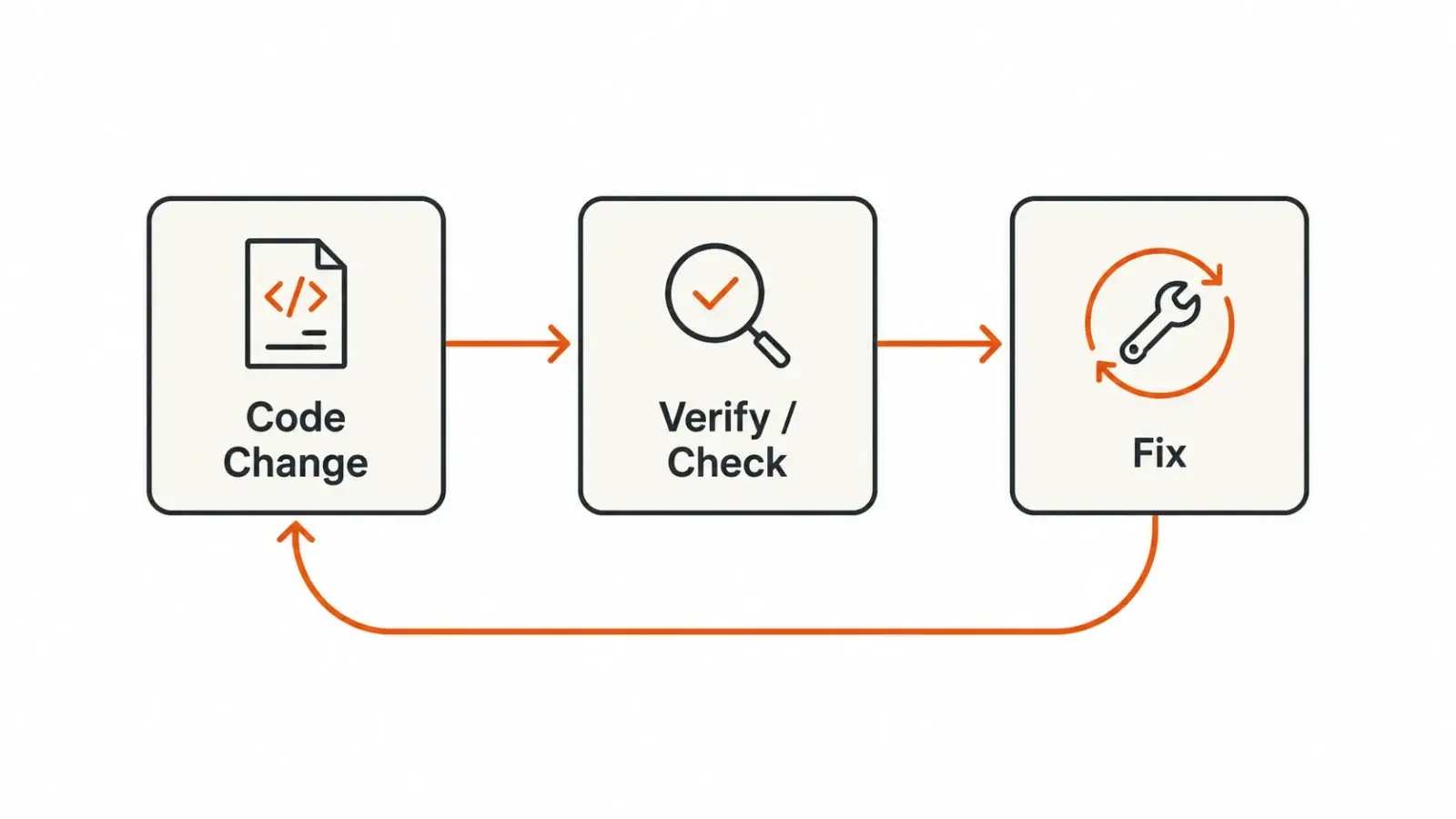
Learn how to turn the manual checks you already do into skills, so Claude Code tests, fixes, and verifies its own work automatically.

How to Run an AI Chatbot Locally on Your Own PC
A step-by-step guide to running a private, offline AI chatbot on your own PC using free tools like Ollama and LM Studio, plus the hardware, models, and tradeoffs to know before you start.
Google Engineers' Best AI Prompts for Developers
Google Cloud asked ten of its own engineers what AI prompt they refuse to work without. The answers reveal a single pattern: turn AI into a skeptical second opinion, not an agreeable assistant.
Stop Guessing Why Your RAG Fails: Mastering Small Context Window Limits
Standard RAG systems often fail on consumer hardware not because of poor retrieval, but because they lack a proper context budget. By implementing a hierarchical summary routing layer—using summaries for discovery and raw chunks for answering developers can ensure the most relevant evidence actually reaches the model, even within tight token constraints.